Showing posts with label Who's Afraid Of The Big Bad Tony Campolo?. Show all posts

Tuesday, January 31, 2012

Who's Afraid Of The Big Bad Tony Campolo? (Part 3)

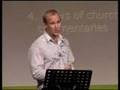
Continuing from the previous post where my friend Andrew in Australia wrote a letter to his church expressing his concerns about their invitation to Tony Campolo. This letter serves as a great example of how to graciously write to church leadership in expressing a concern. It also serves as an excellent profile of Tony Campolo's dangerous theology/teachings. Today we conclude with point 5 in Andrew's letter:

5. He promotes an ecumenism that includes the Muslim, Jewish and Catholic faiths. This flows from a Universalist perspective.

Campolo’s willingness to consider people of other faiths as “brothers and sisters” indicates that he believes that the other faiths are also correct. There are a myriad of quotes I could use to demonstrate his views but I will just highlight a couple from the interview with Shane Claiborne.

“We don't have to give up trying to convert each other. What we have to do is show respect to one another. And to speak to each other with a sense that even if people don't convert, they are God's people, God loves them, and we do not make the judgment of who is going to heaven and who is going to hell.”

“I think there are Muslim brothers and sisters who are willing to say, "You live up to the truth as you understand it. I will live up to the truth as I understand it, and we will leave it up to God on judgment day."”

“I don't think you have to compromise as a Christian the belief that Jesus is the only Savior but what I do think we have to say is that the grace of God extends way beyond the limitations of my religious group”

“It seems to me that when we listen to the Muslim mystics as they talk about Jesus and their love for Jesus, I must say, it's a lot closer to New Testament Christianity than a lot of the Christians that I hear. In other words if we are looking for common ground, can we find it in mystical spirituality, even if we cannot theologically agree, Can we pray together in such a way that we connect with a God that transcends our theological differences?”

(From: “On evangelicals and interfaith cooperation: an interview with Tony Campolo by Shane Claiborne” - http://findarticles.com/p/articles/mi_m2096/is_1_55/ai_n13798048/ - Emphasis mine)

In these excerpts I see a number of major issues.

o Our God and Allah are not the same. Even a basic reading of the Bible and the Koran demonstrates this.
o The use of “brothers and sisters” to refer to Muslim people. In the wider evangelical scope, this is a term exclusively reserved for Christians. It is also highly problematic to refer to them as “God’s people”.
o Since we do not have the same God, it does not make sense to pray together (see above point)
o He denies that a person can only be saved through the name of Jesus (Acts 4:12)

Conclusions:

With all this in mind let me explain what I am hoping for from the leadership of this church.

1. That the leadership would set aside personal relationships or popular opinion and evaluate Tony Campolo based solely on his theology. I believe that yourselves as leadership should be willing to undertake personal research to evaluate the claims I have made in this letter.
2. That the church would resolve to not allow him to be a guest speaker if indeed his teachings are found to be heretical (that is, they contravene the primary teachings of the Bible in regards to the Scriptures, salvation and the nature of the Trinity).
3. That the church would withdraw the invitation to teach and challenge Tony Campolo to repent of his heretical views.

I am personally convinced that several of the teachings of Tony Campolo are nothing short of heresy and I submit this document in the hope that the congregation will be protected and made aware of the dangers of his teachings. I love the church, its members and its leadership. My wife and I have been more than willing to pour ourselves out in service because we feel that God has called us here in this season of our lives and we believe that part of that calling is to defend the flock from wolves.

We hope that you will be faithful in considering my research and that you will do what is necessary in this case to protect the flock over whom God has made you an under-shepherd.

Our prayers and support are with you at this time.

In Christ Jesus our Lord and Saviour.

Andrew.

Andrew went on to say that the leadership team pondered his letter for a couple of weeks before responding with (my cliff notes paraphrase) "Tony Campolo is a really nice guy and says he loves Jesus and we don't really think any of the issues you raise are really that big a deal" (how was that summation Andrew?).

Andrew signed off in his letter to me by saying:

From both his letter of response and a meeting I held with him a couple of weeks later, I came to see that my pastor and I look at this issue very differently.

When I look at Tony Campolo’s teachings, I see the few examples of heresy as sufficient to disqualify him if they are substantiated.

When my pastor looks at his teachings, he sees the bulk of his supposedly solid work as sufficient to overlook “minor” issues.

He clearly does not see the issues the way I do and neither does he see them to be of the same significance that I do.

Eventually, Tony Campolo did speak at our church and my summary would be:

• It was a moralising attempt to bully people into acting sanctified without actually addressing the root issue.
• He used Scripture 4 times and got it wrong… 4 times.
• He quoted a Catholic mystic, an existentialist and not one conservative Christian teacher.
• He told a couple of stories that made me question his moral character or at very least his wisdom.
• He made a bunch of veiled attacks at traditional conversion.

I do have to hand it to him though. He is a very skilled communicator. All this was said with a steady flow of laughter and applause.

I hope to write a far more detailed review of the talk when I can stomach listening to it again.

Great effort Andrew, may your labor that has been shared on this blog be of benefit to the many readers who encounter these situations within their own local church contexts.

Go Back To Part 2
Go Back To Part 1

Friday, January 27, 2012

Who's Afraid Of The Big Bad Tony Campolo? (Part 2)

Continuing from the previous post where my friend Andrew in Australia wrote a letter to his church expressing his concerns about their invitation to Tony Campolo. This letter serves as a great example of how to graciously write to church leadership in expressing a concern. It also serves as an excellent profile of Tony Campolo's dangerous theology/teachings. Today we pick up at point 3 in Andrew's letter:

3. Involvement in Eastern/New Age/Mystic practices.

There are a number of practices that he [Campolo] affirms in his work but I want to pick on one that he is particularly open about. He often speaks of his affirmation of the practice of centering prayer, a practice that bears a very strong resemblance to trancendental meditiation as practiced in Eastern Religions, the Occult and the New Age religions. My wife was strongly involved in these practices before being saved and has a very good understanding of the dangers accociated with them.

“To do so, I have to drive back the animals--the "animals" being the hundred and one things that trouble me from the day before and the many things that are waiting to be done in the new day. I've got to push everything out of mind save the name of Jesus. I say His name over and over again, for as long as fifteen minutes, until I find my soul suspended in what the ancient Celtic Christians called a "thin place"--a state where the boundary between heaven and earth, divine and human, dissolves. You could say that I use the name of Jesus as my koan.”
(“Mystical Encounters for Christians” - http://www.beliefnet.com/Faiths/Christianity/2006/02/Mystical-Encounters-For-Christians.aspx)

Campolo speaks of this practice often and reaffirms this in a large number of other sources.

Roger Oakland observes:

“This term ‘thin place’ originated with Celtic spirituality (i.e., contemplative) and is in line with panentheism. ... Thin places imply that God is in all things, and the gap between God, evil, man, everything thins out and ultimately disappears in mediation”
(Faith Undone, pp. 114, 115).

There appear numeroustheological problems in Campolo’s quote :

o We don’t see anywhere in Scripture that this form of prayer is endorsed or modeled. Nowhere in Scripture are we commanded to empty our minds.
o We see in Scripture a conversive form of prayer (Matthew 6:9-13, Ephesians 3:14-21)
o In Psalm 119, the psalmist uses a word that we translate “meditate” which in Hebrew can be also translated as “ponder, converse, commune, complain, declare, muse, pray, speak, talk”.
o Jesus spoke against repetious prayers (Matthew 6:7)
o Much of the book of Leviticus speaks of God’s peope not adopting the pagan practices of the culture/faiths/peoples around them.
o This practice was historically rejected almost universally by Christian theologians.

With many of these mystical practices (particularly in the Islamic, Catholic and Jewish forms) we also see an undermining of the authority of Scripture. The scripture becomes subject to experience and we have the testimony of centuries of history to see how those involved in these mystical practices then interpreted God’s Word in “new” ways. This issue goes right back to the Gnostic traditions that were impacting the church in the first few centuries of the faith.

4. His own story of conversion is foreign to the Biblical pattern.

Campolo’s conversion experience is documented in his book “Letters to a Young Evangelical” where he tells the story of his very gradual becoming a Christian. He speaks of not having a born again experience like his mother had, but rather that he came to knowledge of Jesus though centering prayer.

“When I was a boy growing up in a lower-middle-class neighborhood in West Philadelphia, my mother, a convert to Evangelical Christianity from a Catholic immigrant family, hoped I would have one of those dramatic “born again” experiences. That was the way she had come into a personal relationship with Christ. She took me to hear one evangelist after another, praying that I would go to the altar and come away “converted.” But it never worked for me. I would go down the aisle as the people around me sang “the invitation hymn,” but I just didn’t feel that anything happened to me. For a while I despaired wondering if I would ever get “saved.” It took me quite some time to realize that entering into a personal relationship with Christ does not always happen that way.”
(“Letters to a Young Evangelical” - page 8)

In my case intimacy with Christ had developed gradually over the years, primarily through what Catholics call “centering prayer.” Each morning, as soon as I wake up, I take time—sometimes as much as a half hour—to center myself on Jesus. I say his name over and over again to drive back the 101 things that begin to clutter my mind the minute I open my eyes. Jesus is my mantra, as some would say.
( “Letters to a Young Evangelical” - page 9)

“I learned about this way of having a born-again experience from reading Catholic mystics, especially The Spiritual Exercises of Ignatius Loyola. Ignatius, a founder of the Jesuit order, was once a soldier and it was only when he spent a long time in a hospital bed recovering from a battle wound that his heart and mind focused on God. Like most Catholic mystics he developed an intense desire to experience a “oneness” with God. Gradually, he came to feel an intense yearning for the kind of spiritual purity that he believed would enable him to experience the fullness of God’s presence within.”
(“Letters to a Young Evangelical” - page 30)

I want to stress here that I am not attempting to assert that he is not saved. I cannot and do not know where his heart truly sits with Jesus because although I can examine some of the fruit of his public ministry, I don’t know him personally. I am instead suggesting that his story gives insight into his understanding of the Gospel which as a logical consequence may have implications for his own salvation.

His account of salvation raises serious questions due to the clear teaching of Scripture that someone must be born again (John 3:3) and also the clear example of Scripture which speaks of a clear sharp conversion:
o the Ethiopian Eunuch (Acts 8)
o Paul (Acts 9)
o Cornelius (Acts 10)
o Lydia (Acts 16)
o the Philippian jailer (Acts 16)

That is not to say that people cannot come to faith over a season of life where God does many things in them, but we see both from Scripture and our experience that there is always a clear conversion experience, even for those who have grown up inside the church.

Completely lacking from his account (at least from the excerpts I have) is any mention of:
o Sin
o The cross
o Repentance
o Forgiveness
o Judgement

Instead we see mention of “oneness with God” and a strong dependence on feelings.

The essence of the problem is that his testimony and preaching indicates a different Gospel to the one clearly taught in Scripture and we are told to “watch out for those who cause divisions and create obstacles contrary to the doctrine that you have been taught” (Romans 16:17). He does not appear as theologically naive as to not be aware of the Biblical elements of salvation, or to orthodox thinking.

Thanks Andrew, I'll pick up this letter again and finish it on Tuesday. In the mean time just take a peek at Campolo's bizarre explanation of what it means to be "born again". See if you can figure out what part of Scripture he is referring to . . .


Go On To Part 3
Go Back To Part 1

Tuesday, January 24, 2012

Who's Afraid Of The Big Bad Tony Campolo? (Part 1)

How would you deal with a situation where you are a member of a local church that you love and suddenly find out that they have invited a known heretic to come and fill their pulpit? Would you respond? How would you approach this?

My friend Andrew in Australia was recently confronted with this situation and he responded to it. In fact, I was so impressed with Andrew's careful research and gracious presentation that I wanted to post it here over the next week as a very helpful example of a God honoring way to go about responding to such a dire situation. Andrew also compiles an excellent and helpful profile on the beliefs/teachings of Tony Campolo. Take it away Andrew . . .

Earlier this year, our church announced that they would be hosting Tony Campolo as a guest speaker. This immediately raised a red flag for me as I had heard him referenced many times in a negative light and so I began to research his teachings. I also informed a couple of the pastors at our church that I was aware of some theological issues and that I was going to investigate further.

I want to release some of the work I did to the general public for a couple of reasons.

1. I want people to gain a better understanding of Tony Campolo and his teaching. I do not believe he is theologically sound and as such I want people to see the wolf that he is.
2. I want people to learn from my attempt at challenging church leadership. My attempt was by no means perfect, and I don’t want it to be held up as “This is how you should do it”. I was very fortunate to have a number of people come along side me in this process to read and re-read what I wrote. I believe that it is possible to graciously but firmly warn a church that they are hosting a wolf.

I want to emphasise that the leadership of this church are people I consider friends and the church community is one that I dearly love. To this end, I have been careful to remove all names of the people and the church involved so that this cannot be seen as an attack on the church or its leadership.

Below is a letter that I submitted to the church leadership summarising my research.

Dear [Pastors],

I want to bring you up to speed with my research into Tony Campolo and what I have learned.

I want to make a couple of things very clear before I get into specifics:

• I am raising these issues out of a heart for the church and a love for God. I am not interested in causing division or making a scene but rather I am genuinely concerned for protecting the theological integrity of the church and its members.
• I have always placed a high value on supporting, assisting and encouraging you as leaders of this church and this remains my commitment. I am not seeking to judge you in any way for this decision to allow Tony Campolo to speak here nor do I wish to undermine you in any way.
• I am conerned only with Tony Campolo’s theology. His character and behaviour are not in question. Everything I hear, including from his critics, is that he is a really nice guy and a very skilled communicator, however what concerns me and I have therefore examined are his teachings. I do not have relationship with him and do not need to in order to evaluate his teachings and whether or not he ought be invited as teacher. We must be like the Bereans of Acts 17 who closely examined the scriptures to examine the claims that Paul made. We are also commanded to identify those whose teachings are not in alignment with scripture and beware of them (Rom 16:17). To do this we must look at the breadth of his teachings both in what he has written and said publically.

To that end I have endeavoured to work from primary sources rather than potentially out of context secondary sources:
• I have read a number of articles that he has written that are published on the beliefnet website.
• I have read transcripts of interviews that he was involved in.
• I have also listened to audio of him being interviewed.

As a secondary source, I have also used large sections from his books cited on a couple of blogs. I refer to these as secondary because I do not have complete copies of his work. In these cases I have been careful to examine the blog writer’s integrity with quoting work by comparing quotes to primary sources that I did have access to. For the moment I am prepared to trust these quotes as accurate unless I am shown that they are out of context or otherwise inaccurately reproduced in which case I am more than happy to reconsider their use in making my case.

I have found multiple areas that are of considerable theological concern and I have summarised them below.

1. He denies God’s omniscience and omnipotence

Following hurricane Katrina’s destruction in the US in late 2005, Campolo weighed in with his view that clearly undermined both God’s foreknowledge of the event and his ability to intervene.

“Unfortunately, there are a lot of bad answers. One such answer is that somehow all suffering is a part of God's great plan. In the midst of agonies, someone is likely to quote from the Bible, telling us that if we would just be patient, we eventually would see "all things work together for the good, for those who love God, and are called according to His purposes." (Romans 8:28)”

“I don't doubt that God can bring good out of tragedies, but the Bible is clear that God is not the author of evil! (James 1:15) Statements like that dishonor God, and are responsible for driving more people away from Christianity than all the arguments that atheistic philosophers could ever muster. When the floods swept into the Gulf Coast, God was the first one who wept.”

“Perhaps we would do well to listen to the likes of Rabbi Harold Kushner, who contends that God is not really as powerful as we have claimed. Nowhere in the Hebrew Scriptures does it say that God is omnipotent.

Kushner points out that omnipotence is a Greek philosophical concept, but it is not in his Bible. Instead, the Hebrew Bible contends that God is mighty. That means that God is a greater force in the universe than all the other forces combined.”
(“Katrina: Not God's Wrath--or His Will” - http://www.beliefnet.com/Faiths/Christianity/2005/09/Katrina-Not-Gods-Wrath-Or-His-Will.aspx)

To imply that this was not God’s will (in the title of the article) implies that the creation is not subject to God. He reinforces this in the later quote by Rabbi Kushner. That is flat out historical heresy.

It is a concession by someone who does not have a Biblical understanding of suffering.

2. He does not understand the Biblical Gospel

In an interview with Shane Claiborne he states:

“Catholicism would say that at the moment of death every person is confronted in that split moment with Christ and is given the opportunity of saying yes or no. To say otherwise is to say God has got to be a pretty unfair deity, to condemn three quarters of the human race to hell without them ever having a chance.”

“There is much in Christianity that would suggest exactly the same thing, particularly Romans the 2nd chapter, where the apostle Paul says "What do we say of those who do not accept the law of God," and I would add "as we understand it," "and are faithful to all the things that God calls us to do--will God not have to make room for them?" He asks that as a rhetorical question, leaving the reader with the obvious sense--"but of course." So I think that the apostle Paul would be a lot more generous towards Islamic people than most of my evangelical brothers and sisters are.”
(From: “On evangelicals and interfaith cooperation: an interview with Tony Campolo by Shane Claiborne” - http://findarticles.com/p/articles/mi_m2096/is_1_55/ai_n13798048/ - Emphasis mine)

In this statement, he shows a lack of understanding of the justice of God. In his words, “God has got to be a pretty unfair deity” if he punishes people for their sins. This is seen again as he dramatically misinterprets Romans 2:14-15 which clearly speaks of the fact that all people, Jew or Gentile understand God’s standards because he has written his law on their hearts in the form of a conscience and that he has revealed some of himself through nature so that this will leave them without excuse (Romans 1:20). He doesn’t appear to understand that all of us have enough sin to condemn us (Romans 3:23) and that lack of belief in Christ is not the primary reason someone should be condemned (Romans 2:6, 8, 12, John 3:18). It would appear that to satisfy his lack of understanding he has taken on a Catholic teaching which has no basis in scripture.

In addition to this he clearly promotes a work-righteous salvation where a “good Muslim” (see Romans 3:10-12) can have a relationship with Jesus (without knowing his name) if he fulfils the Muslim command to give to the poor.

“When it comes to what is ultimately important, the Muslim community's sense of commitment to the poor is exactly in tune with where Jesus is in the 25th chapter of Matthew. That is the description of judgment day. And if that is the description of judgment day what can I say to an Islamic brother who has fed the hungry, and clothed the naked? You say, "But he hasn't a personal relationship with Christ." I would argue with that. And I would say from a Christian perspective, in as much as you did it to the least of these you did it unto Christ. You did have a personal relationship with Christ, you just didn't know it. And Jesus himself says: "On that day there will be many people who will say, when did we have this wonderful relationship with you, we don't even know who you are ..." "Well, you didn't know it was me, but when you did it to the least of these it was doing it to me."”
(From: “On evangelicals and interfaith cooperation: an interview with Tony Campolo by Shane Claiborne” - http://findarticles.com/p/articles/mi_m2096/is_1_55/ai_n13798048/ - Emphasis mine)

Again he mishandles Scripture by misinterpreting Matthew 25:31-46. Jesus does not say in this account of end times (which we need to show great care in interpreting) that the good deeds make someone righteous but rather by taking this passage in conjunction with others on the same subject, we can see that Jesus is saying that the fruit of the righteous is good works (i.e. Righteousness causes good works, not good works causes righteousness). In a passage such as this, we must interpret the text in light of clearer Scriptures (Matthew 7:15-20, Ephesians 2:8-9, James 2:14-25, Galatians 5:16-26).

Jesus did not place upon us the yoke of work-righteousness. Christ has declared me righteous through His finished work on the cross and that there is nothing that I can do to contribute to my own salvation. My works and my sins are not judged when deciding my eternal fate. This is not true for Islam, Judaism or Catholicism. It is through a work-righteous theology that Tony Campolo is able to rationalize his ecumenism.

His commitment to the poor is to be highly commended and his work is well known however, I must reiterate that we are not judging his works but his theology.


Go On To Part 2